The Minor
Protection Act
By Jodi Cowles · 20th Anniversary Edition
The battle for the future of American Christianity is being waged. Which side will win is anybody's guess.
As an Amazon Associate I earn from qualifying purchases.
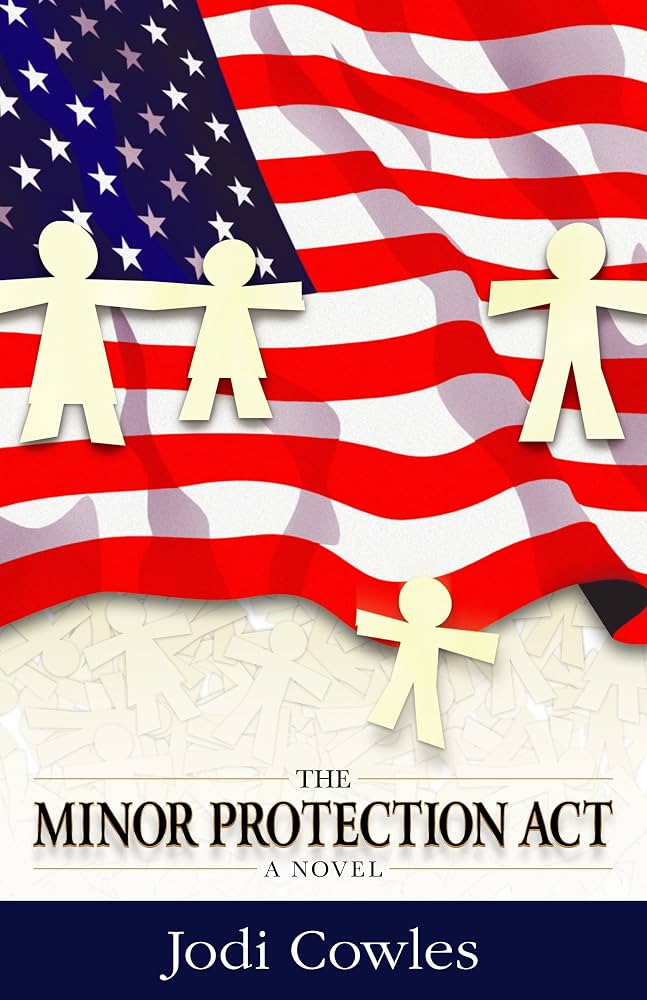
The Minor Protection Act sounds innocent enough. But if this campaign proves successful, Christianity as we know it will cease to exist in the United States. For no religion can stand when its children are taken out of the picture.
This cutting-edge novel by Jodi Cowles revolves around a political movement that reframes traditional Christian parenting as a form of extremism — and the federal legislation that follows. What begins as a policy debate becomes a nightmare for ordinary families across America.
Now in its 20th Anniversary Edition, The Minor Protection Act is a thought-provoking work that forces readers to look beyond the political arguments of the moment and take a closer look at where the road we're on might lead.
For readers who want fiction that takes ideas seriously — and isn't afraid of uncomfortable questions.
Prologue
An excerpt from The Minor Protection Act
If the politically correct set was searching for a poster couple, they would need to look no further than Erik and Roselyn Jessup. In college they lit up doobies while attending passionate speeches about legalizing marijuana and freeing Tibet. Erik was even arrested once for helping break into an animal research center. Roselyn bailed him out. After five years of dating they decided to tie the knot. Seven years later, after Roselyn had enough time to get established in her career, she gave birth to their pride and joy, Jayla Lynn Jessup.
Both had satisfying full-time jobs that left them only enough time to pour themselves into Jayla. They attended every event at school, even if it meant working overtime and paying the after school program for a few extra hours. When Jayla made the principal's list or won a spelling bee, they were cheering, and filming, from the front row.
Jayla began junior high at a brand new school with a brand new curriculum. It was being called 'progressive' in the papers; the first program of its kind implemented in California with plans for a nationwide rollout over the next 10 years. Praise poured in from around the country, applauding the straight talk about sexuality and focus on tolerance.
Jayla turned 13 two years into junior high. For her birthday she told her parents she wanted to order pizza and hang around the house—there was something she needed to tell them. Over pepperoni and Coke, Jayla calmly informed them that she'd been discussing it with her friends and teachers and had decided she was gay.
Though she had never had a girlfriend, or a boyfriend for that matter, Erik and Roselyn were quick to affirm her decision and let her know she had their full support. Roselyn applauded her daughter's honest, courageous move and told Jayla how proud she was.
She was 15 and seriously involved with Carla, the 17-year-old senior who was President of the Gay Pride Club. When the year ended Carla left for college on the east coast and broke off the relationship in a letter.
Jayla was heartbroken. Erik and Roselyn were quick to comfort, as any loving parents of a shattered teenager, but their answers seemed hollow to Jayla, their comfort cold. At 16 she began dabbling in drugs. By the time her senior year began the family bond that was once so strong had disintegrated.
By Christmas the medication seemed to be working. Jayla was coming around, spending more time at home. She seemed calmer and more at peace. They were even beginning to talk about college. But New Year's morning they found her dead, her anti-depressant bottle and a quart of vodka laying empty in the trash and a mass of journals and letters scattered around her in the bed.
Erik and Roselyn were devastated. What they found in the journals only served to inflame their anger. Some boy named Nick had been telling their daughter that she was a sinner, quoting Bible verses that said her sexual preference was an abomination before God. Jayla's journal was full of self-loathing, page after page of rambling, agonizing pain.
In the end their grief found relief, as it so often does, in bitterness and hatred. The day after Jayla's funeral, attended by hundreds of students from Jayla's school, Erik and Roselyn met with the District Attorney. A year later, bitterness not yet assuaged, they went to see a lawyer. Someone would pay.
As an Amazon Associate I earn from qualifying purchases.
What readers are saying
Reader Reviews
“The beginning was daunting and uncomfortable. Could this really happen in America? As the story expanded to a nation-wide 'witch hunt', I couldn't stop thinking about it. I wanted to know that America and Christians could survive such an atrocity. The author did an amazing job depicting the threat to our freedoms and at the same time, bolstering the strength, courage and determination of those who put God first in their lives. Well done!”
“Excellent book by an incredible author. In light of today's events, this isn't too far from reality. I highly recommend this book especially to those suspicious of government.”
“I just read Minor Protection Act for the 3rd time. It's still thought provoking, riveting & hard to put down.”
“Having read all three of Ms. Cowles' novels, I can say I'm impressed with her ability to write in different genres yet keep the story action moving forward. 'The Minor Protection Act' reveals her understanding of government as well as the political scene and the potential for disaster if checks and balances aren't in place. Although the subject matter was disturbing, I kept reading, always eager to find out what happened next.”
“MPA is a very important book, especially relevant...right on point...as current as today's news! Devastatingly accurate in its concepts, a must-read for those who are concerned that ALL American citizens retain their right to worship as they choose. Much of it could almost be labeled 'prophecy.' Miss Cowles is amazingly insightful!”
“One thing Cowles can't be accused of is demonizing political opponents. Even the characters charged with carrying out the state's agenda are portrayed as fairly decent folks with understandable, even sympathetic motives. This is perhaps the most chilling part of the story.”
“A frightening and plausible picture of a future where forced 'tolerance' is the law, making Christianity equal to terrorism and punishable by the most heartbreaking means.”
Discussion Questions
The Minor Protection Act is a novel that provokes strong reactions — and strong conversations. These questions are designed to go beyond the plot.
- 1.
The Minor Protection Act sounds reasonable on its surface — protecting children from extremism. How does Cowles use this framing to explore the danger of well-intentioned legislation?
- 2.
The novel was first published 20 years ago. How does reading it now change your experience? Does it feel more or less plausible than when it was written?
- 3.
Even the antagonists in this novel have understandable motivations. How does this moral complexity affect your reading of the story?
- 4.
The book draws a parallel to the book of Acts — persecution scattering the church and forcing it to grow. Do you see this as hopeful or frightening?
- 5.
What freedoms does the novel suggest Christians take for granted? Has your thinking on this changed after reading?
- 6.
How does the novel handle the tension between civic engagement and spiritual faithfulness?
Ready to read?
20th Anniversary Edition — available on Amazon.